

Introduction: Why Pharmacy Management Matters in Bangladesh
Running a pharmacy in Bangladesh is not easy. Every day, thousands of customers walk into pharmacies looking for medicines they urgently need. At the same time, shop owners must manage suppliers, balance stock, handle expiry dates, keep proper records for audits, and make sure patients get safe and correct medicines.
Traditionally, most pharmacies in our country have been running manually—with registers, calculators, and memory. But with growing medicine varieties, strict government monitoring, and rising customer expectations, the old way is no longer enough. A single mistake in pricing, expiry handling, or prescription recording can cost money, reputation, and sometimes even lives.
This is where pharmacy management software comes in. It’s not just about billing faster; it’s about bringing discipline, safety, and growth to your pharmacy business. At MNP Techs, we’ve seen how small single-store pharmacies, as well as large chains, completely transform their operations with the right digital system.
In this guide, I’ll break down everything you need to know about pharmacy software—features, benefits, compliance, local requirements, and how to select the best system for your business in Bangladesh.
Challenges Faced by Pharmacies in Bangladesh
Before understanding the solution, let’s look at the real problems pharmacy owners face every day.
1. Manual Billing Errors
Many pharmacies still use calculators or handwritten cash memos. In a rush, mistakes happen—wrong pricing, missed discounts, or incorrect quantity. These small errors reduce profit and damage customer trust.
2. Expiry Losses and Wastage
Medicines have strict expiry dates. Without proper tracking, shops often discover expired items only after it’s too late. This leads to financial loss and even risk of mistakenly selling unsafe products.
3. Stockouts and Dead Stock
One common problem is running out of fast-moving medicines while keeping shelves full of slow-moving brands. Without a clear view of demand trends, owners often tie up cash in dead stock while disappointing customers with frequent “nai” answers.
4. Supplier and Payment Management
A typical pharmacy in Bangladesh deals with multiple suppliers. Each supplier has different terms, trade offers, and credit periods. Without a proper ledger, it’s hard to track dues, returns, and bonuses. Disputes are common.
5. Compliance and Audit Risks
The Directorate General of Drug Administration (DGDA) requires proper records of purchase, sales, and batch details. During audits, manual registers often create confusion. A missing invoice or incorrect batch record can lead to penalties.
6. Customer Experience Gaps
Customers today expect quick billing, digital payments like bKash or Nagad, and even prescription record-keeping for future visits. Pharmacies that can’t meet these expectations lose out to modern competitors.
These are the pain points pharmacy management software is designed to solve.
What is Pharmacy Management Software?
Simply put, pharmacy management software is a digital system that helps pharmacies manage sales, inventory, purchase, suppliers, customers, and compliance in one place.
Unlike a generic POS system, pharmacy software is built with medicine-specific needs in mind—batch and expiry tracking, generic-to-brand mapping, prescription storage, dosage instructions, and medical compliance.
Think of it as a combination of:
Billing software (POS) → Fast and accurate checkout with barcode or search.
Inventory system → Monitors stock, expiry dates, reordering needs.
Accounting & supplier control → Tracks purchases, dues, payments, and returns.
Pharmacy ERP → For bigger chains, integrates multiple outlets, warehouses, and reports into one system.
In the Bangladesh context, the best pharmacy management software should also:
Work offline during internet outages and sync later.
Support Bangla invoices and interface.
Integrate with bKash/Nagad payments.
Provide DGDA-compliant reports for audits.
Be simple enough for staff with limited IT skills to learn quickly.
When used properly, this system becomes the backbone of a pharmacy—reducing waste, improving profit, and ensuring safer service to patients.
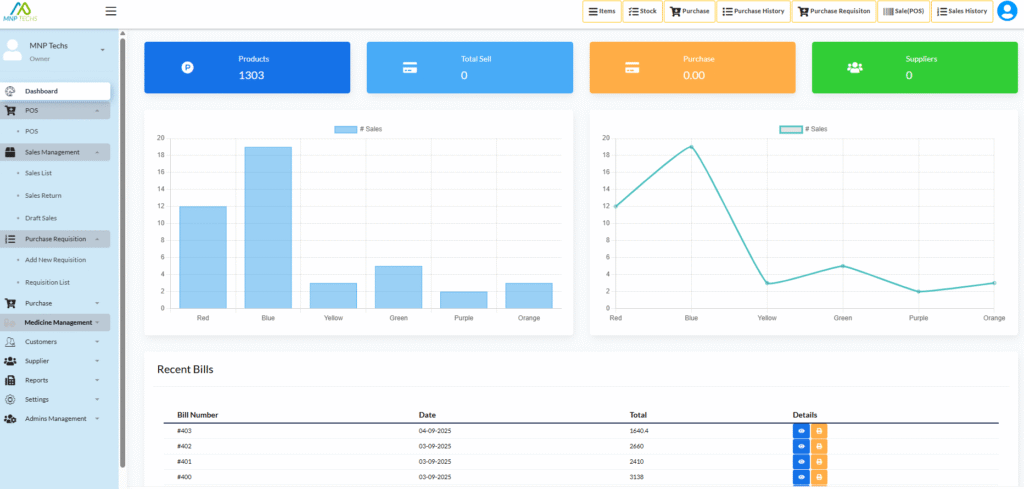
Core Features Every Pharmacy Needs in Bangladesh
A good pharmacy management software is more than just billing. It must cover every part of a pharmacy’s operations—sales, purchase, stock, suppliers, patients, and reports. Below I’ll explain the core features in detail, so you know what to expect and why each one matters for your business.
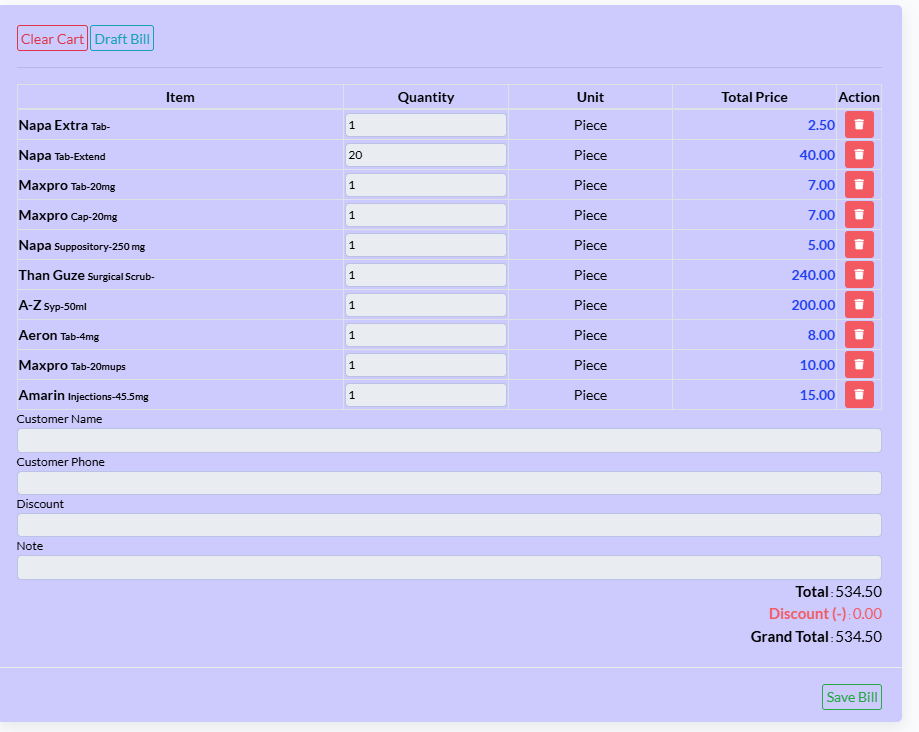
1. Sales and Billing (POS)
The billing counter is the heart of any pharmacy. If billing is slow or error-prone, both customers and staff get frustrated.
Fast Checkout: Software must allow barcode scanning as well as smart search by brand, generic, or even therapeutic class. Imagine a busy Friday evening—being able to find “Napa 500 mg” instantly without scrolling through long lists saves precious time.
Prescription Capture: Many customers come with doctor prescriptions. A good system allows attaching a scanned copy or photo, along with patient and doctor details. This is useful for records, compliance, and future refills.
Discount and Offers: Some suppliers give trade discounts or bonus packs. The POS should handle both item-wise and bill-wise discounts without manual calculation.
Payment Flexibility: In Bangladesh, digital payments like bKash, Nagad, Rocket, and debit/credit cards are becoming common. Your system should allow multiple payment modes in one bill.
Refunds and Returns: Medicine returns must be managed carefully. The software should adjust stock by batch and expiry when a customer brings back unused strips.
Why it matters: Smooth billing builds trust and ensures customers leave satisfied. Faster checkout also means serving more customers per day.
2. Inventory and Stock Management
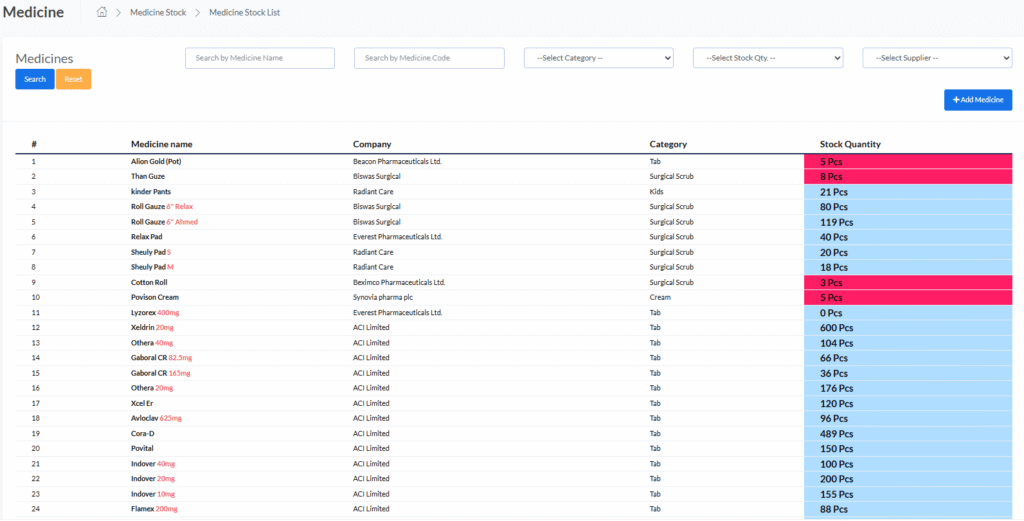
This is where most pharmacies lose money if done manually. Medicines have strict expiry rules and fast-moving cycles.
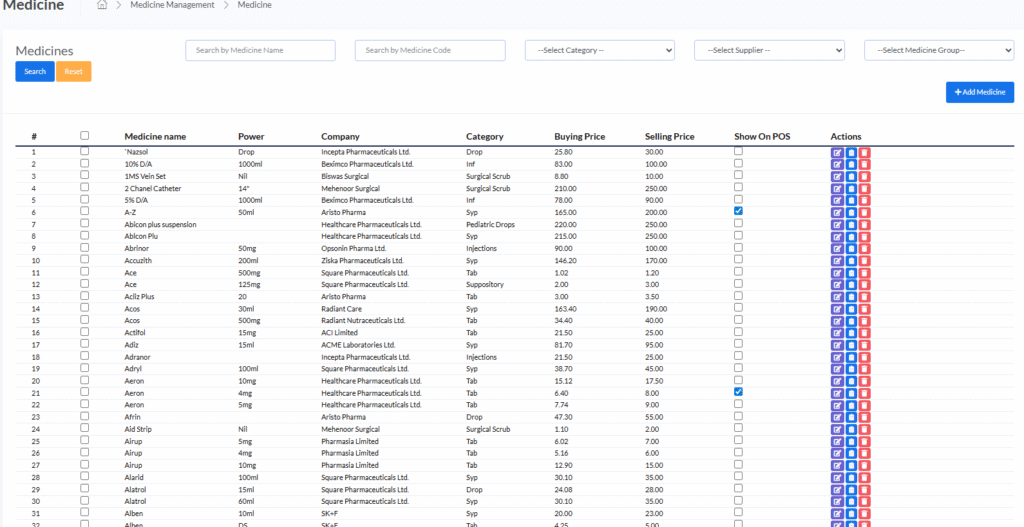
Batch and Expiry Tracking: Each purchase must be entered with batch number, expiry date, and quantity. The system should automatically block expired batches from billing.
Near-Expiry Alerts: Instead of discovering expired stock too late, you should get alerts 90, 60, and 30 days before expiry. This gives time to return them to suppliers or sell at discounts.
Reorder Levels: The software should analyze sales trends and suggest reorders so you never run out of essentials like antibiotics or paracetamol.
ABC Analysis: Focus on “A” items that generate the highest revenue. For example, 20% of your medicines might give 70% of sales.
Dead Stock Report: Identify slow-moving items that are blocking your capital.
Why it matters: Proper stock control ensures availability for patients, reduces wastage, and increases profit margins.
3. Purchase and Supplier Control
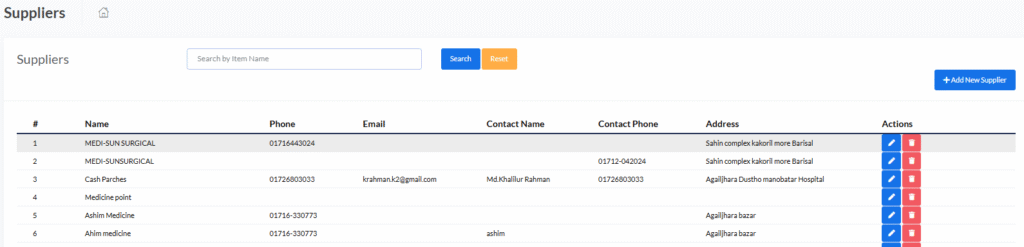
Pharmacies deal with multiple suppliers daily. Tracking dues, bonuses, and credit periods manually often leads to confusion.
Purchase Orders (PO): You can generate POs directly from the system based on reorder alerts. This ensures you buy only what is needed.
Goods Received Note (GRN): When suppliers deliver, you record the exact quantities received, including free bonus strips or promotional items.
Supplier Ledger: Each supplier should have a clear record of purchases, payments, and returns.
Debit/Credit Notes: Easy creation of notes when returning near-expiry stock or receiving replacements.
Price Updates: If suppliers increase the Trade Price (TP) or MRP, the software should allow bulk updates.
Why it matters: A clean supplier ledger avoids disputes, helps with negotiations, and ensures timely payments.
4. Patient Safety and Compliance
A pharmacy is not just a shop—it’s a healthcare provider. Mistakes in dispensing can harm patients, so software must assist in safety.
Substitute Suggestions: If a brand is unavailable, the system should show alternatives with the same generic. For example, if “Losectil” is out of stock, it can suggest “Omep” or “Ocid.”
Allergy and Warning Notes: Patient profiles can include allergy information or special warnings.
Recall Tracking: If DGDA announces a recall, you can quickly locate and block the affected batches.
Dosage Instructions: Bills should print dosage instructions if added by the pharmacist.
Why it matters: Safety builds long-term customer trust and protects your pharmacy’s reputation.
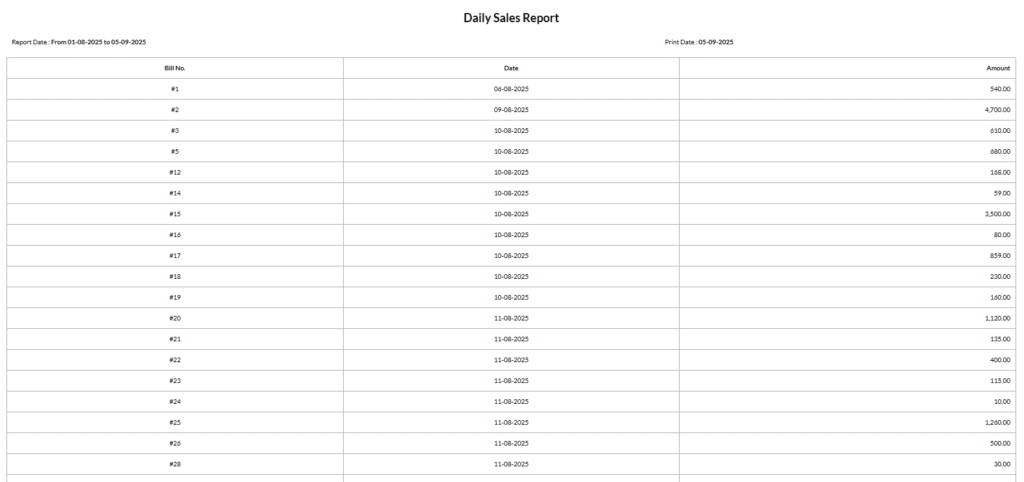
5. Reports and Analytics
Without proper reports, pharmacy owners often run blind. A good system provides clear, simple reports for decision-making.
Daily Sales Report: Breaks down sales by cashier, time slot, or payment method.
Profit and Loss Report: Shows margins by item, category, or supplier.
Expiry Dashboard: Lists items expiring soon, so you can plan returns.
Stock Valuation: See total inventory value using FIFO or Weighted Average.
Customer Reports: Track repeat customers, credit sales, and refill reminders.
Why it matters: Reports turn data into action. Instead of guessing, you make decisions backed by numbers.
6. Multi-Branch and Chain Pharmacy Features
For pharmacies with more than one outlet, central control becomes vital.
Central Catalog: All branches share the same item master to avoid duplication.
Branch-Wise Stock: Head office can view stock levels at each branch in real time.
Inter-Branch Transfer: Move stock from one branch to another without confusion.
Branch Comparison Reports: Identify which branch performs best and why.
Why it matters: Centralized control helps chain owners scale smoothly without losing oversight.
7. Bangladesh-Specific Needs
Many international pharmacy systems don’t work well here because they miss local realities.
Offline Mode: Internet outages are common. Billing must continue without disruption and sync later.
Bangla Invoices and Interface: Staff feel more comfortable with Bangla support. Customers appreciate Bangla invoices.
bKash/Nagad Integration: These are the most popular payment methods here, so smooth entry and reporting are essential.
DGDA Compliance: The software should provide audit-ready reports for regulatory checks.
Cold Chain Tracking: For insulin, vaccines, and certain antibiotics, temperature-sensitive handling must be noted.
Why it matters: A system built for Bangladesh avoids operational headaches and ensures smooth adoption.
Detailed Benefits of Pharmacy Management Software in Bangladesh
Pharmacy management software is not just about “going digital.” The true benefit comes when the system saves money, reduces mistakes, improves efficiency, and makes customers happier. Let’s look at the practical benefits in detail.
1. Near-Expiry Alerts Reduce Financial Loss
One of the biggest pain points in Bangladeshi pharmacies is expiry losses. Many owners realize too late that valuable medicines are expired and cannot be sold.
How software helps: It gives automatic alerts 90, 60, and 30 days before expiry. You can return near-expiry stock to suppliers or sell them at a discount.
Real-world example: A small pharmacy in Mirpur reduced expiry losses by 60% within six months after using expiry alerts. Previously they were losing BDT 25,000–30,000 yearly.
Benefit: Protects profit margins and frees cash for new stock.
2. Smart Reordering Improves Cash Flow
Many pharmacies either overstock or understock because reordering is guesswork.
How software helps: It tracks sales trends and suggests reorders. If you sell 200 strips of “Napa 500 mg” monthly, the system can remind you when stock falls below 50 strips.
Real-world example: A pharmacy chain in Chattogram used reorder alerts and cut down dead stock worth BDT 3 lakh in one year.
Benefit: No stockouts of fast-moving items, and no blocked money in unsold stock.
3. Faster Billing Improves Customer Experience
Customers don’t like waiting in line, especially when sick.
How software helps: Barcode billing and quick search reduce billing time from 3 minutes to less than 1 minute.
Real-world example: A shop near Dhaka Medical College Hospital doubled its daily capacity during peak hours because billing became faster.
Benefit: More satisfied customers, more daily sales.
4. Supplier Ledger Avoids Payment Disputes
Managing multiple suppliers manually often leads to mistakes in due amounts.
How software helps: Each purchase, return, and payment is recorded automatically.
Real-world example: A pharmacy in Rajshahi used to argue with suppliers over bonus strips and debit notes. With software, everything is tracked, and disputes are now resolved in minutes.
Benefit: Stronger supplier relationships and better negotiation power.
5. Substitution and Safety Protect Patients
Sometimes a prescribed brand is unavailable. Without guidance, a pharmacist may give the wrong substitute.
How software helps: It suggests safe alternatives by generic. For example, “Losectil” can be replaced with “Omep.”
Real-world example: A community pharmacy in Khulna avoided a serious dispensing mistake when software flagged a high-dose medicine not suitable for a child.
Benefit: Protects patient safety and builds long-term trust.
6. Reports Provide Clarity and Control
Many pharmacy owners don’t know the real profit they make until year-end.
How software helps: Daily, weekly, and monthly profit/loss reports show exactly how much you are earning. Expiry dashboards show upcoming risks.
Real-world example: A chain of five outlets in Sylhet identified one branch consistently underperforming. Reports revealed poor reorder practices. After correction, sales improved by 20%.
Benefit: Clear visibility, better decisions, higher profitability.
7. Multi-Branch Management Supports Growth
Without software, managing multiple outlets is almost impossible.
How software helps: Owners can check live sales, stock, and cash closing from head office. Inter-branch transfers reduce wastage.
Real-world example: A Dhaka-based chain expanded from 2 to 8 outlets within 18 months because they had central control over pricing and inventory.
Benefit: Easier expansion with less risk of fraud or mismanagement.
8. Offline Mode Keeps Business Running
In Bangladesh, internet connections often fail. Without offline mode, billing stops.
How software helps: It allows billing offline and syncs automatically when the internet returns.
Real-world example: A pharmacy in Rangpur town had no downtime during 3 hours of internet outage because billing continued smoothly.
Benefit: No lost sales, no frustrated customers.
9. Audit-Ready Records Save Headaches
DGDA inspections can happen anytime. Manual registers usually create confusion.
How software helps: Provides clean purchase, sales, and stock reports with batch details ready in seconds.
Real-world example: A pharmacy near Uttara avoided penalty during an audit because they produced complete records directly from the system.
Benefit: Peace of mind and legal safety.
10. Improved Customer Loyalty
Customers return to pharmacies that remember them, serve fast, and provide safe alternatives.
How software helps: Patient records, refill reminders, and quick billing create a professional image.
Real-world example: A pharmacy in Cumilla introduced SMS refill reminders for chronic patients. Within 6 months, repeat sales grew by 30%.
Benefit: Stronger relationships, steady revenue, loyal customers.
Hospital and Clinic Pharmacy Modules
Hospital and clinic pharmacies are more complex than community shops. They don’t just sell over the counter; they also manage indents from wards, prescriptions from doctors, and supply to different hospital departments. For this reason, their software needs specialized features.
1. Departmental Indent and Approval
Hospitals usually receive requests (indents) from different wards or departments. The pharmacy must approve these requests and issue stock accordingly.
How software helps: Creates an online indent request, routes it to the central pharmacy for approval, and ensures medicines are issued against a record.
Why it matters: Prevents over-issuing and ensures accountability.
2. Ward Stock and Return Management
Many hospitals keep medicines in wards for emergencies. Without proper tracking, stock often disappears or expires unnoticed.
How software helps: Records ward issues and returns. Expired or unused medicines can be traced back.
Why it matters: Reduces wastage and ensures compliance.
3. Integration with Hospital Billing
In private hospitals, medicines issued to inpatients must also appear in the patient’s final bill.
How software helps: Integrates with the hospital management system (HMS) so pharmacy issues are directly added to the patient’s account.
Why it matters: Prevents revenue leakage and makes billing transparent.
4. Controlled & High-Risk Medicines
Hospitals deal with narcotics, chemotherapy drugs, and high-risk medicines.
How software helps: Restricts access to authorized staff only and maintains detailed logs of every issue.
Why it matters: Ensures legal compliance and patient safety.
Wholesale and Distribution Workflows
Many Bangladeshi pharmacies act as wholesalers or distributors, supplying medicines to smaller shops, clinics, and even rural outlets. Their needs are different from retail.
1. Bulk Purchase and Discounts
Wholesalers buy in large volumes and offer discounts or bonus schemes.
How software helps: Manages slab-based pricing (e.g., buy 100 strips, get 10 free).
Why it matters: Keeps pricing transparent and avoids errors.
2. Van Sales and Route Planning
Wholesalers often use vans to deliver stock across towns and villages.
How software helps: Prepares daily route sheets, assigns invoices to van sales, and tracks collections.
Why it matters: Ensures deliveries are systematic and reduces missed orders.
3. Credit Control
Many retailers buy on credit and pay later. Tracking these dues manually leads to disputes.
How software helps: Maintains customer credit limits, sends alerts on overdue accounts, and records payments against invoices.
Why it matters: Improves cash flow and avoids bad debts.
4. Scheme & Bonus Tracking
Suppliers often give special schemes (e.g., buy 500 strips, get 50 free).
How software helps: Records every scheme and ensures free items are logged properly.
Why it matters: Increases profit by making sure no free stock is lost or misused.
5. Secondary Sales Tracking
For wholesalers who represent specific brands, it’s important to capture sales at the retailer level.
How software helps: Generates secondary sales reports, showing which retailer bought which brands and in what volume.
Why it matters: Helps negotiate with pharma companies and suppliers.
E-Commerce and Online Pharmacy Functions
With more people in Bangladesh using smartphones, online pharmacies are growing rapidly. Even small shops now receive orders over WhatsApp, Facebook, or phone calls. To manage this, your pharmacy software should support e-commerce functions.
1. Online Order Capture
Customers may place orders on your website, app, or social media.
How software helps: Integrates with online order platforms or allows manual entry of phone/WhatsApp orders directly into the POS.
Why it matters: Prevents double-entry and ensures online sales are tracked in the same system as offline sales.
2. Prescription Upload and Verification
DGDA requires prescription records for certain medicines.
How software helps: Customers can upload prescriptions, which pharmacists verify before dispatch.
Why it matters: Ensures compliance and patient safety.
3. Delivery & Logistics Management
Delivery slotting: Choose same-day or next-day delivery.
Delivery boy assignment: System generates delivery slips and routes.
Status update: Marks order as “out for delivery” and “delivered.”
Why it matters: Keeps operations transparent and customers informed.
4. Payment Integration
Digital payments: bKash, Nagad, Rocket, or bank cards.
Cash on delivery: Record cash collection against each order.
Why it matters: Simplifies accounting and reduces mismatch.
5. Customer Refill Reminders
Many patients need monthly refills (for diabetes, blood pressure, thyroid, etc.).
How software helps: Sends automated SMS or WhatsApp reminders.
Why it matters: Builds loyalty and increases repeat sales.
Compliance and Audit Readiness
The Directorate General of Drug Administration (DGDA) in Bangladesh is strict about medicine handling. Pharmacies must keep proper purchase, sales, and stock records.
1. Purchase and Sales Registers
How software helps: Automatically generates purchase/sales registers with batch and expiry details.
Why it matters: Auditors can check these reports quickly without manual paperwork.
2. Batch Traceability
Every sale is linked to a batch number. If there is a recall, you can find all customers who bought that batch.
Why it matters: Protects patients and avoids legal problems.
3. Expiry & Recall Management
DGDA often issues recall notices for certain brands.
How software helps: Filters affected batches instantly and blocks billing.
Why it matters: Shows professionalism and compliance.
4. Prescription Recordkeeping
For restricted medicines, DGDA may ask to see prescription records.
How software helps: Stores scanned or uploaded prescriptions with invoices.
Why it matters: Provides legal safety during audits.
Data Security, User Roles, and Backups
Pharmacy data is sensitive: sales, customer prescriptions, supplier accounts. Losing it or letting unauthorized staff misuse it can be costly.
1. User Roles and Permissions
Cashier: Can bill but cannot edit purchase price.
Manager: Can approve returns, discounts, and stock adjustments.
Owner/Admin: Full rights with audit logs.
Why it matters: Prevents fraud and keeps control.
2. Audit Logs
Every action—bill, return, discount—is recorded with user name, date, and time.
Why it matters: Accountability discourages misuse.
3. Backup & Restore
Daily backup: System should back up data locally and in the cloud.
Restore drills: Test recovery at least once a month.
Why it matters: Protects against data loss from hardware failure or cyber-attack.
4. Offline Mode with Sync
Internet issues are common in Bangladesh.
How software helps: Billing continues offline and syncs automatically later.
Why it matters: Zero downtime and no loss of sales.
Hardware and Setup Guide for Pharmacies
Pharmacy software is not useful without the right hardware. The good news is you don’t need very expensive machines. A standard setup is enough for most small and medium pharmacies in Bangladesh.
1. Computer or Laptop
Requirement: Windows-based PC or laptop with at least Core i3 processor, 4GB RAM, and 250GB storage.
Why it matters: Software will run smoothly without lag.
2. POS Printer
Thermal receipt printer (80mm): For fast, small-sized bills.
A4 printer (optional): For large reports, purchase invoices, or hospital indent slips.
Why it matters: Customers prefer clean printed invoices over handwritten slips.
3. Barcode Scanner
Handheld scanner (USB): To scan medicine barcodes quickly.
Why it matters: Reduces billing mistakes and speeds up checkout.
4. UPS and Power Backup
Requirement: Small UPS to prevent system shutdown during load shedding.
Why it matters: Protects against data loss and keeps billing active.
5. Internet Connection
Requirement: Stable broadband or mobile internet.
Offline mode backup: Even if the internet goes down, billing continues.
Why it matters: Ensures smooth syncing and remote reporting.
6. Label Printer (Optional)
Useful if you want to print your own barcodes or batch labels.
Why it matters: Helps in stock organization, especially for wholesalers.
Training Plan for Pharmacy Staff
Even the best software fails if staff don’t know how to use it properly. Training should be short, simple, and task-based. Here’s a 7-day training schedule you can follow:
Day 1 – Basic Billing
Creating bills, applying discounts, handling payments.
Learning barcode scanning and quick search.
Day 2 – Returns and Refunds
Customer returns by batch.
Printing credit notes and adjusting stock.
Day 3 – Purchase Entry and Stock Updates
Recording supplier purchases.
Adding batch and expiry details.
Handling bonus/free items.
Day 4 – Reports and Daily Closing
Generating sales reports.
Checking profit and loss.
Cash closing at end of day.
Day 5 – User Roles and Security
Creating cashier, manager, and admin accounts.
Approvals for discounts and returns.
Day 6 – Backup and Data Safety
Running daily backup.
Testing data restore process.
Day 7 – Q&A and Assessment
Staff practice session.
Short test to confirm learning.
Tip: Give each staff member hands-on practice instead of only showing them.
30-Day Implementation Roadmap
Pharmacy owners often ask: “How do I switch from manual to digital without chaos?” The answer is to follow a clear rollout plan.
Week 1 – Preparation
Collect item master list: brand, generic, strength, pack size, MRP, supplier.
Clean up supplier list with contact details.
Install software and test hardware setup.
Week 2 – Trial Billing (Parallel Run)
Run the software in parallel with manual billing for 1 week.
Staff get practice while you still have backup in manual registers.
Identify mistakes and fix settings.
Week 3 – Go-Live (Full Billing)
Switch fully to software billing.
Stop manual registers except for audit backup.
Ensure all staff can handle customer rush.
Week 4 – Monitoring and Adjustment
Check expiry alerts, reorder reports, and supplier ledger.
Adjust reorder levels and supplier terms based on first reports.
Conduct refresher training for staff.
Outcome after 30 days:
Pharmacy runs fully on software.
Expiry control and stock management become easier.
Owner has clear visibility of profit and daily cash flow.
Common Mistakes to Avoid in Pharmacy Digitalization
Switching to software can be life-changing for a pharmacy. But many owners make mistakes that reduce the system’s value. Here are the most common pitfalls in Bangladesh and how to avoid them.
1. Going Live Without a Clean Item Master
If your medicine catalog has spelling mistakes, duplicate entries, or missing batch details, billing will become messy.
Solution: Prepare a clean item master list (brand, generic, pack, strength, MRP, supplier) before rollout.
2. Skipping Batch and Expiry at Purchase
Some staff enter purchases without batch and expiry details, thinking it saves time.
Problem: Expiry alerts won’t work, and stock tracking will fail.
Solution: Make batch entry mandatory during purchase.
3. Giving All Staff Admin Rights
If every staff can edit purchase prices or give discounts, you will lose money.
Solution: Use user roles. Cashiers only bill; managers approve exceptions.
4. Not Testing Backups
Many pharmacies take backups but never test restores. During a real crisis, they discover backups were corrupt.
Solution: Test restore once every month.
5. Ignoring Training for New Staff
Old staff may know the system, but new joiners often get no training.
Solution: Have a simple training manual or short video for newcomers.
6. Mixing Personal Expenses in Pharmacy Accounts
Owners sometimes record personal expenses in daily sales.
Solution: Keep pharmacy accounts separate for clear profit/loss.
KPIs Every Pharmacy Should Track
Software gives a lot of reports, but the challenge is knowing what to focus on. Here are the most important Key Performance Indicators (KPIs) for a Bangladeshi pharmacy.
1. Stockout Rate
Definition: How often you run out of fast-moving items.
Why track: Customers leave if you frequently say “nai.”
2. Expiry Loss Percentage
Definition: Value of expired stock as a percentage of total sales.
Target: Keep under 1%.
3. Gross Margin by Category
Definition: Profit earned after purchase cost.
Why track: Some categories (like antibiotics) have higher margins than generics.
4. Dead Stock Value
Definition: Value of items not sold in the last 90 days.
Why track: Dead stock locks up cash that could buy fast-moving items.
5. Billing Speed
Definition: Average time per bill.
Why track: Slow checkout reduces customer satisfaction.
6. Discount Leakage
Definition: Total discounts given vs. approved.
Why track: Prevents unauthorized discounts.
7. Cash Variance
Definition: Difference between system closing balance and physical cash.
Why track: Exposes theft or mismanagement.
8. Repeat Customer Rate
Definition: % of customers who come back within 30 days.
Why track: Repeat customers are more valuable than one-time buyers.
Scaling from 1 Store to Multiple Branches
Many pharmacies in Bangladesh start as a single shop but later expand to chains. Scaling requires discipline and the right software.
1. Standardize Your Item Master
Use one catalog across all outlets. If one branch calls a product “Napa” and another calls it “Napa Extra,” reports will get messy.
2. Centralize Pricing and Discounts
Set uniform MRP and discount rules from the head office. Branches should not randomly give discounts.
3. Real-Time Branch Dashboards
Owners should be able to check live sales, stock, and cash closing from any branch on their phone or laptop.
4. Inter-Branch Stock Transfers
Surplus in one branch can cover shortages in another. Transfers should be recorded properly with batch details.
5. Branch Benchmarking
Compare performance across outlets. Example: Gulshan branch sells more insulin, Mirpur branch sells more antibiotics. Adjust stock accordingly.
6. Strong Head Office Control
Branch managers should have limited rights. All sensitive operations (like supplier payments, new item creation, and price changes) should be controlled by head office.
Real Example:
A chain pharmacy in Dhaka grew from 3 branches to 10 branches within 2 years. They succeeded because they used a centralized pharmacy management system. Every morning, the owner could see yesterday’s sales, expiry risks, and dues for all branches on a single dashboard.
Improving Customer Experience Through Software
In Bangladesh, a pharmacy is more than a shop. For many families, it’s the first point of healthcare. A good system not only helps owners but also improves patient experience.
1. Refill Reminders
Patients with chronic illnesses (like diabetes or hypertension) need regular medicines. Sending them SMS or WhatsApp reminders builds trust and ensures they don’t run out of essential drugs.
2. Dosage Information on Bills
Invoices can include simple instructions like “1 tablet twice daily after meal.” This small detail adds value and reduces misuse.
3. Loyalty Programs
Offer cashback or loyalty points for repeat purchases. Even a BDT 10 cashback on the next purchase makes customers come back.
4. Easy Returns and Refunds
Customers should feel confident they can return unused medicines if allowed. A software-managed return system makes this smooth.
5. Delivery Services
Allow customers to order via phone, WhatsApp, or online. Delivery with digital payment (bKash/Nagad) makes life easier, especially for elderly patients.
FAQ: Common Questions from Bangladeshi Pharmacies
Q1: Can I run the software if internet is down?
Yes. With offline mode, billing continues and syncs when internet returns.
Q2: Will it support Bangla invoices?
Yes. Bills can be printed in Bangla, English, or both.
Q3: Do I need new hardware?
No. Most Windows PCs with barcode scanner and receipt printer are enough.
Q4: Can I import old Excel stock?
Yes. Existing data (brand, batch, expiry, stock) can be imported.
Q5: Will it help with DGDA audits?
Yes. Purchase, sales, stock, and batch reports are audit-ready.
Q6: Is it useful for multi-branch pharmacies?
Yes. Centralized reporting, stock transfers, and branch comparisons are built-in.
Pricing and ROI Explained Simply
Pharmacy software should not be seen as an expense—it’s an investment.
Typical Costs
One-time setup: data migration, training, and installation.
Monthly or yearly license fee: per outlet or per counter.
Optional add-ons: SMS pack, label printing, delivery app.
ROI (Return on Investment) Example
Expiry loss reduced by BDT 20,000 per year.
Dead stock reduced by BDT 1 lakh.
Faster billing increases daily sales by 10–15%.
Supplier disputes reduced to zero.
Most pharmacies recover the software cost within 6–12 months.
Case Study: From Manual to Digital Success
A community pharmacy in Narayanganj was struggling with expiry losses and cash mismatches. They decided to implement pharmacy management software.
Before Software
Monthly expiry losses: BDT 8,000
Daily billing errors: 3–5 cases
Supplier disputes: frequent
No clear view of profit
After Software (6 months)
Expiry loss dropped to BDT 2,000/month
Billing errors reduced to almost zero
Supplier dues managed transparently
Daily profit reports available instantly
The owner now plans to open a second branch because management is under control.
How MNP Techs Supports Pharmacies
At MNP Techs, we understand pharmacies in Bangladesh because we build solutions locally. Our focus is simple:
Speed: Billing must be lightning-fast.
Safety: Batch, expiry, and compliance are never optional.
Clarity: Reports that accountants and auditors can use directly.
Support: Local team, quick response, and training in Bangla.
We design with Bangladesh in mind—Bangla invoices, offline mode, bKash/Nagad integration, cold-chain tracking, and DGDA compliance. Whether you run a single pharmacy or a 50-branch chain, our system adapts to your needs.
Conclusion: The Future of Pharmacies in Bangladesh
The pharmacy business in Bangladesh is changing. Customers expect fast service, digital payments, and professional handling. Regulators demand proper records and compliance. Owners want less wastage and higher profits.
Pharmacy management software is no longer a luxury—it’s a necessity.
If you adopt the right system, you will:
Reduce expiry losses.
Improve customer loyalty.
Expand safely to multiple branches.
Sleep peacefully knowing your records are safe and audit-ready.
At MNP Techs, we believe in one simple promise:
👉 Your pharmacy, managed smartly, with technology built for Bangladesh.
If you’re ready to take the next step, visit mnptechs.com or reach out for a demo. Let’s build a safer, more profitable future for your pharmacy together.