Introduction: The Question Every Bangladeshi Business Owner Asks
Almost every time I sit with a business owner, apartment chairman, or club committee member in Bangladesh, I hear this question:
“Cloud-based software safe তো?”
“ডাটা হারিয়ে গেলে কী হবে?”
“ইন্টারনেট না থাকলে কাজ চলবে?”
These concerns are valid.
And honestly, they should be discussed before, not after, choosing software.
This article is not written to sell cloud software.
It is written to clear confusion, remove fear, and help you make a confident decision.
Why Bangladeshi Businesses Are Naturally Afraid of Cloud Software
Let’s acknowledge reality.
Where the Fear Comes From
Past experience with virus-infected computers
Hard disk crashes with no backup
Fake IT vendors
Lack of technical knowledge
Internet reliability concerns
Most fear is not about cloud itself — it’s about loss of control.
What Cloud-Based Software Actually Means (In Simple Language)
Forget technical definitions.
Cloud Software Simply Means:
Your software runs on the internet
Your data is stored securely on servers
You log in with a username & password
You can access it from anywhere (with permission)
That’s it.
No magic. No mystery.
Cloud vs Local Software: The Real Comparison (Bangladesh Context)
This is where clarity matters.
Local (Computer-Based) Software Reality in Bangladesh
Most local systems depend on:
One desktop or laptop
One hard disk
One person who understands it
Common Risks
Virus infection
Windows crash
Hard disk failure
Accidental deletion
No regular backup
📌 I have personally seen years of accounting data lost overnight.
Cloud Software Reality
Cloud software usually offers:
Automated backups
Encrypted data storage
Multiple access levels
Activity logs
Ironically, cloud software is often safer than office computers.
Biggest Myth #1: “If Internet Goes Down, Everything Stops”
This is one of the most common fears.
Reality in Bangladesh
Internet outages today are rare and short
Mobile internet acts as backup
Most work does not need 24/7 access
Also, ask yourself:
How often do you actually work when there is no internet at all?
👉 For most businesses, this fear is overestimated.
Biggest Myth #2: “Cloud Means Anyone Can See My Data”
This is completely false.
How Data Security Actually Works
Login-based access
Role permissions
Encrypted connections
Access logs
Your data is far safer than:
Excel files shared on WhatsApp
Office computers with shared passwords
Biggest Myth #3: “Cloud Is Only for Big Companies”
Cloud software is actually better for small and medium businesses.
Why SMEs Benefit More
No server cost
No IT staff required
No maintenance headache
Predictable cost
In Bangladesh, cloud software levels the playing field.
Is Cloud Software Safe in Bangladesh? The Honest Answer
Short Answer:
✅ Yes — if implemented responsibly
Long Answer:
Cloud software safety depends on:
Vendor credibility
Data ownership clarity
Backup policy
Local support
Cloud itself is not risky.
Bad vendors are.
What Makes Cloud Software Safe for Bangladeshi Businesses
1. Data Ownership Clarity
You must know:
Who owns the data?
Can you export it?
What happens if you stop using the software?
If the vendor avoids these questions — walk away.
2. Role-Based Access Control
Not everyone should see everything.
Good cloud software allows:
Admin access
Financial access
Read-only access
Activity tracking
This protects both data and people.
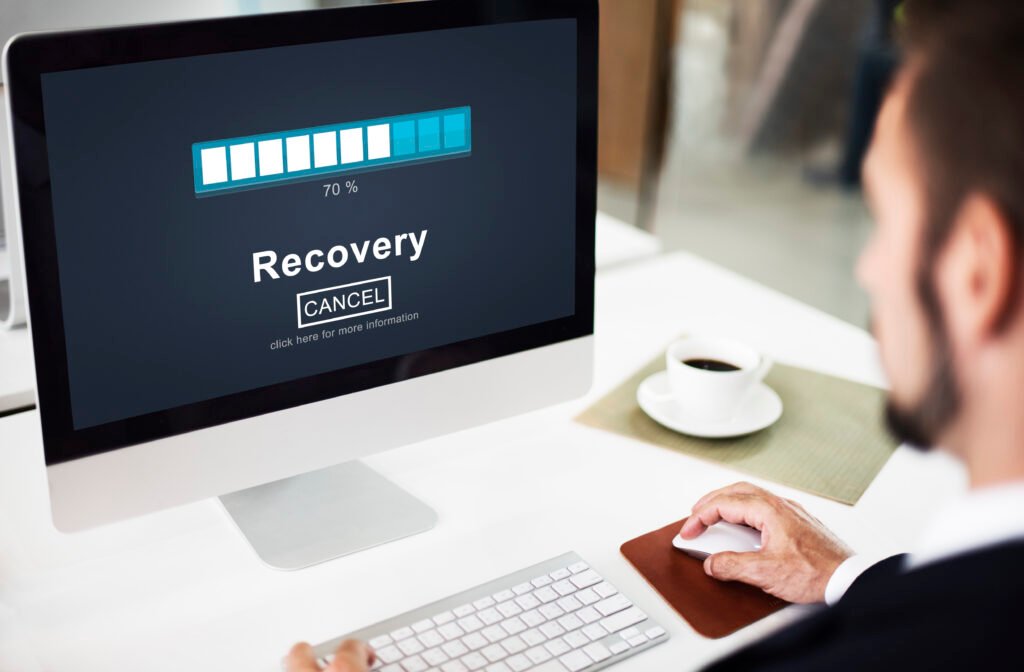
3. Automated Backup System
Ask clearly:
How often is backup taken?
Where is backup stored?
Can backup be restored?
Manual backup is unreliable.
Automation is non-negotiable.
4. Local Support & Accountability
Cloud software without local responsibility is risky.
Choose vendors who:
Understand Bangladeshi operations
Provide real support (not just email)
Cloud Security vs Human Error (The Hidden Truth)
Let me share an uncomfortable truth.
Most Data Loss Happens Because of:
Wrong file deletion
Password sharing
Virus attacks
Untrained staff
Not because of cloud failure.
Cloud systems reduce human error by:
Limiting access
Logging actions
Automating processes
Why Many Bangladeshi Businesses Are Moving to Cloud in 2026
Across apartments, clubs, pharmacies, and SMEs, I see a clear trend.
Key Reasons
Remote access
Committee change continuity
Audit readiness
Transparency
Peace of mind
Cloud software is no longer a luxury.
It is becoming a necessity.

When Cloud Software Might NOT Be Suitable
Let’s be balanced.
Cloud may not be ideal if:
No internet at all (very rare now)
Highly sensitive military-grade data
Vendor is unknown or unverified
For most commercial, residential, and service businesses, cloud is safe.
How to Choose a Safe Cloud Software Provider in Bangladesh
Before choosing any cloud software, ask these questions:
✔ Is the company registered in Bangladesh?
✔ Do they provide written data ownership policy?
✔ Is support local and responsive?
✔ Do they offer training?
✔ Is access role-based?
If answers are clear — you are safe.
Final Words from Me (Personal Note)
As Managing Director of MNP Techs, I’ve seen both sides:
Businesses afraid of cloud
Businesses suffering because they avoided it too long
Technology should reduce fear, not create it.
Cloud software, when chosen wisely, offers:
Security
Continuity
Transparency
Control
Don’t let myths stop your growth.
Ask the right questions.
Choose responsible partners.